Claims of Note
Ever wonder what goes into a claim, how it progresses, and how resolves? What about the steps along the way and lessons learned? These files represent some of the claims Brett has managed over time.
NOTE: Some information may be modified in order to ensure client privacy and adhere with state regulation
Claim 1: The Leak, The Interrogation, and The Honest Client
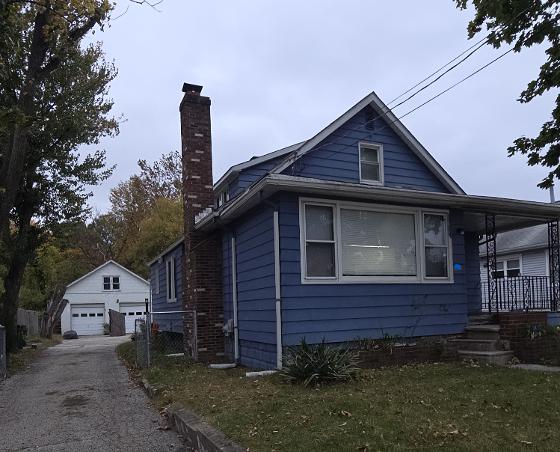
Location: New Jersey
Peril: Wind
Carrier: State Farm
BACKGROUND: Clients had been battling a leak to the garage and performing maintenance when they reached out to Brett for insurance review. Upon inspection of the property, recent storm damage was identified. Paperwork was signed, a claim was filed, and an adjustment was coordinated and subsequently completed.
As the damage to the main home was fairly obvious, the initial estimate from State Farm provided coverage to replace the roof and some siding of the main house. However, claims handlers refused to cover claimed damage to the large, detached garage.
As Brett negotiated with State Farm, the client received letters from their agent informing them the detached garage was severely damaged and they must replace the entire garage or face policy non-renewal. Brett engaged with the agent and clarified the focus was on the garage roof, not the garage structure itself. However, State Farm underwriting was clear - the roof of the garage was damaged and must be replaced. State Farm underwriting went further and confirmed they had conducted remote engineering and risk assessments years before and determined the garage roof was in poor shape and needed replacement. Underwriting conceded it was not until a claim was filed that internal systems determined the roof must now be replaced.
The client was shocked, as the roof is not visible from the ground or property and the home inspection report stated the roof was serviceable. When Brett presented this to claims handlers, State Farm initiated a Fraud Investigation into the client, hired a comprehensive legal team, and required the client to give a 4 hour long sworn testimony about what they knew when they bought the policy. Afterward, claims handlers refused to discuss the claim or the client's policy, would not talk about the letters sent by State Farm Underwriting, and positioned themselves in a pre-litigation posture.
RESULTS: The client used the insurance funds as prescribed. They replaced the roof on the main home and made repairs to the siding where indicated. The roofers they hired performed additional work at private expense to replace the roof on the detached garage so the client could renew their policy. The client declined litigation and changed insurance companies.
LESSONS: Insurance has broad rights to investigate the claim and even to make you give testimony under oath. In some situations, they can conduct their own investigation of your property without telling you, especially when you first buy a policy. This client was completely honest when they bought their policy, and the evidence proved them as such. If State Farm had been able to prove they lied about the condition of the garage roof years before when the policy started, the entire claim could have been reduced to nothing and the client may have faced harsher consequences.
Claim 2: Two Roofers and aRidge
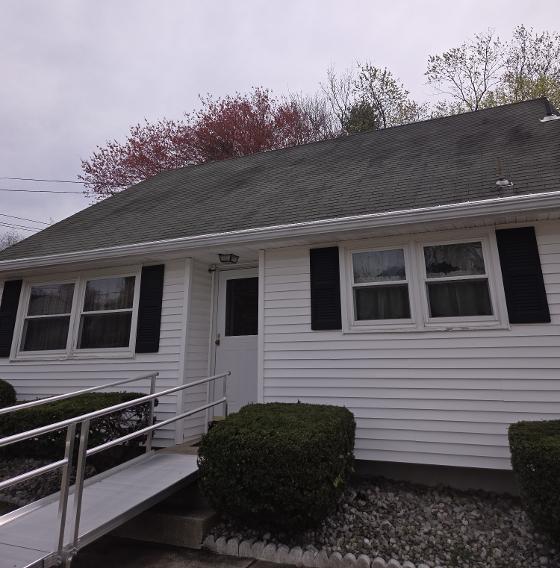
Location: New Jersey
Peril: Wind Storm
Carrier: Plymouth Rock
BACKGROUND: Client filed a claim under the advice of a private roofer following a severe storm for roof damage. Claim handlers inspected the roof and wrote an estimate for half of the roof and siding repair on the main home. When the roofer stopped returning calls, the client hired another roofer, who reached out to Brett upon learning this was an insurance claim.
After a file review and signing paperwork with the client, Brett performed his own investigation of the property and identified damage both the initial roofer and the claims handlers had missed. After discussing this with the adjuster, Brett directed the client's roofer to find the answer regarding several unknown factors with the roof construction. Specifically, Brett asked the roofer to investigate how the ridge, or peak, of the roof was constructed.
Based on policy language and local statutes, coverage might have been mis-applied. Due to roof steepness and condition of the shingles, Brett could not access the roof, so he advised the roofer with step by step instructions for documentation. Upon reviewing the roofer's pictures, Brett created a report and sent it, along with his own evidence from the property, to the claim handlers, requesting a full roof replacement, increase to the siding scope of work, and adding repair to the detached shed.
RESULTS: Claim Handlers agreed with Brett's overall conclusions and assessments and accepted his proposed estimate verbatim, dollar for dollar. The client used the insurance money to replace the roof and repair the siding and shed.
LESSONS: Adjusters are human and miss things. It doesn't mean they're out to get you. But it's up to the client to prove their case. Thorough documentation and logically reasoned presentations, offered in good faith and with professional tone are essential to obtain a positive outcome. Knowing what to look for, like how a ridge is constructed, is equally important. Lastly, we all excel in certain areas. However, we must respect the areas of others. Roofers who do not understand insurance claims should not be involving themselves in that arena and should either refer a PA or avoid the industry entirely. This client experienced a positive outcome when the 2nd roofer knew to refer to a licensed professional and work collaboratively.
Get in touch - We`d love to hear from you
NJ: 3003091826
PA: 1189280
MD: 3003095726
NPN: 21052476
© Copyright Creationsglory